

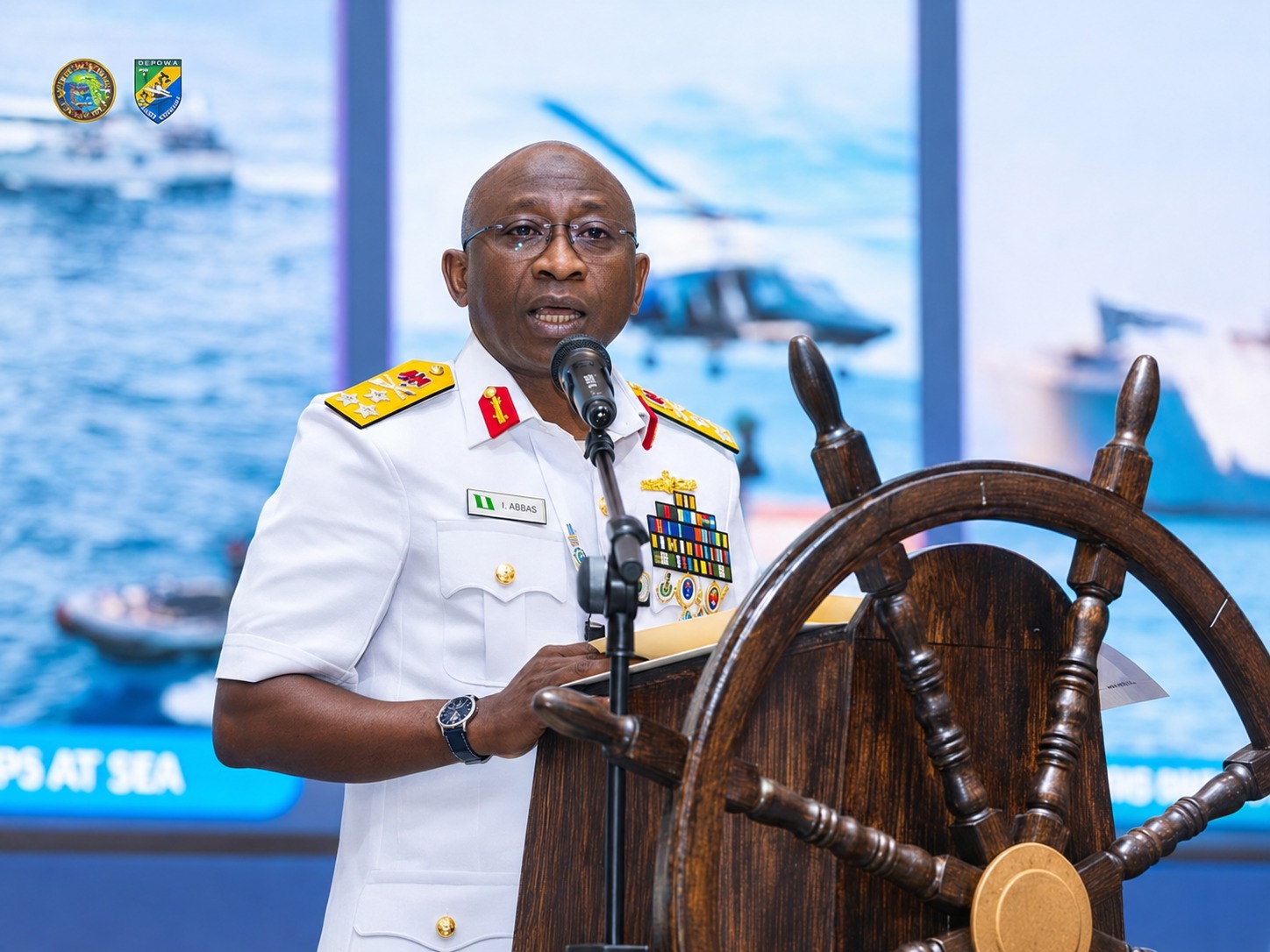
Gulf of Guinea: Nigerian Navy Proposes Six-Month Plan for Joint Maritime Operations
The Nigerian Navy has proposed the development of a six-month operational roadmap by Gulf of Guinea countries to strengthen regional maritime security and improve joint responses to emerging threats.
The proposal was made by the Chief of the Naval Staff, Vice Admiral Idi Abbas AM, during the 10th Symposium of Heads of Navies and Coast Guards in the Gulf of Guinea, which took place in Libreville, Gabon, from November 18 to 19, 2026.
Addressing the symposium under the theme, “Towards an Integrated Regional Naval Force: Which Capabilities Should Be Pooled?”, Abbas called for a more practical and coordinated approach to regional maritime security.
He said participating countries must transform their existing commitments into sustained operational cooperation by pooling resources, strengthening partnerships and integrating their naval capabilities.

The CNS identified intelligence sharing, maritime surveillance, joint patrols, shared naval and air assets, and coordinated logistics as critical measures needed to confront common maritime threats.
He described the Combined Maritime Task Force (CMTF), launched on June 1, 2026, by President Bola Ahmed Tinubu, as a key platform for advancing regional cooperation and ensuring coordinated maritime operations.
Abbas said the initiative demonstrates the commitment of African countries to developing homegrown solutions to security challenges affecting the Gulf of Guinea.

As part of Nigeria’s contribution, he outlined several Nigerian Navy assets designated to support the task force.
These include a helicopter-capable Offshore Patrol Vessel, one helicopter, two fast interceptors and maritime domain awareness support provided through the Falcon Eye System.
The CNS explained that the proposed six-month operational plan would establish clear responsibilities for participating countries, including asset contributions, deployment schedules, intelligence-sharing mechanisms and logistics arrangements.
He said the roadmap would help improve accountability, operational coordination and collective readiness among regional navies.
Abbas also called for sustained political and military commitment to address challenges associated with funding, differences in national capabilities and the coordination of joint operations.
He emphasised that the effectiveness of regional maritime security cooperation should not be judged by the existence of agreements alone, but by the ability of participating countries to deploy their resources collectively against common threats.
The Nigerian Navy said the CNS’s intervention underscores its commitment to strengthening regional partnerships and promoting shared responsibility for maritime security.
Through coordinated operations and sustained collaboration, Gulf of Guinea countries are expected to enhance the protection of maritime trade routes and support economic development across the region.
