

NCS: Strategic Communication Key to Building Public Trust, Driving Institutional Reforms
The Nigeria Customs Service (NCS) has emphasised the importance of strategic communication in building public trust, driving institutional reforms and promoting sustainable development across Africa.
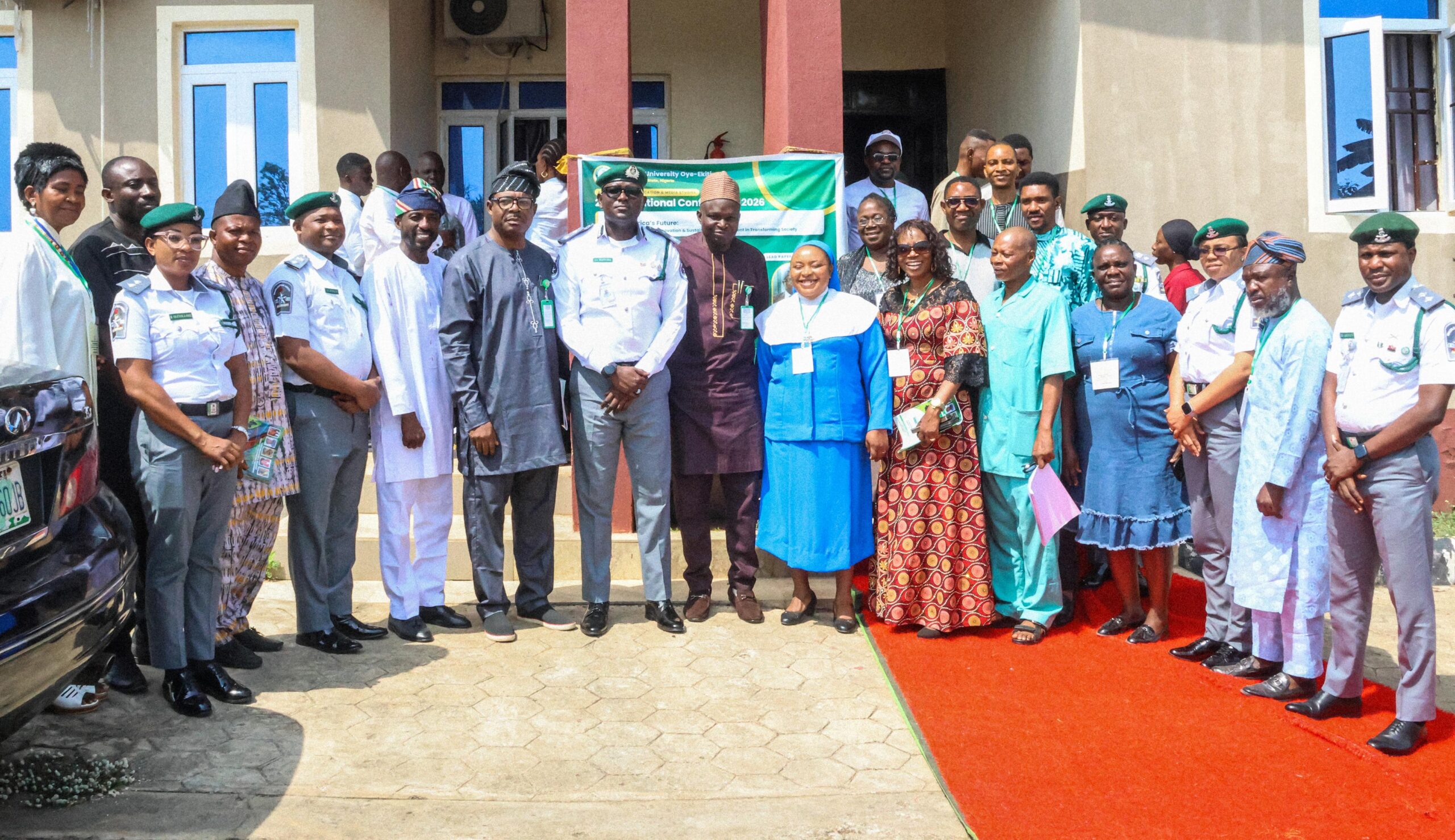
The National Public Relations Officer of the Service, Deputy Comptroller Abdullahi Maiwada, stated this while delivering a keynote address at the 2nd International Conference of the Faculty of Communication and Media Studies, Federal University Oye-Ekiti (FUOYE), on November 23, 2026.

The conference was held under the theme, “Shaping Africa’s Future: Communication, Media Innovation and Sustainable Development in Transforming Society.”
Maiwada urged African institutions to move beyond traditional publicity practices and make communication an integral part of policy development, implementation and stakeholder engagement.
He said institutions must understand that the success of policies and reforms depends largely on their ability to communicate effectively, engage relevant stakeholders and earn public confidence.

According to him, communication should begin at the policy design stage and not be limited to announcing decisions after implementation.
“If Africa must transform its society, it must also transform the way it communicates, informs, engages and builds trust,” he stated.
The Deputy Comptroller explained that effective communication was not determined by the number of press releases or publicity materials produced but by the extent to which the target audience understood the message and made informed decisions.
He added that trust was earned through consistent institutional behaviour, credible information and meaningful engagement.
Speaking on the Customs Service’s reform initiatives, Maiwada highlighted the B’Odogwu Unified Customs Management System, the Authorised Economic Operator (AEO) Programme and the Advance Ruling System as major programmes requiring sustained communication and stakeholder cooperation.
He said the initiatives involved several stakeholders within the trade ecosystem, including importers, exporters, licensed customs agents and Customs officers.
The NCS spokesman further identified the Customs Cares Initiative as a demonstration of the Service’s commitment to social responsibility, noting that communication about such interventions should focus on measurable achievements and benefits to the people.
Addressing the challenges of media innovation, he warned that misinformation, manipulated content and AI-generated falsehoods could undermine public confidence and institutional credibility.
He called for the responsible use of technology, stressing that innovation must not compromise professional ethics, accuracy and accountability.
Maiwada also advocated inclusive communication systems that address language barriers, the needs of persons with disabilities and limited access to digital technology in some communities.
He urged universities and industry practitioners to strengthen their partnerships, pointing to the NCS Gown and Town sessions held during its Public Relations Conferences in 2025 and 2026 as a model for bridging the gap between academic knowledge and professional practice.
He revealed that Lagos was being considered as the host city for the next edition of the programme.
In his remarks, the Vice-Chancellor of FUOYE, Professor Joshua Olalekan Ogunwole, represented by the Deputy Vice-Chancellor (Academic), Professor Joshua Omotosho, reaffirmed the institution’s commitment to producing graduates with the knowledge and skills needed to contribute to national and societal development.
He congratulated the organisers and noted that digital and technological transformation had created opportunities for information access, democratic participation and entrepreneurship in Africa.
However, he cautioned that the development also came with challenges, including misinformation, unequal access to technology and declining media credibility.
Before the conference, the NCS delegation visited the Office of the Vice-Chancellor to strengthen relations between the Service and the university.
The visit also provided an opportunity to explore collaboration in communication research, professional development and knowledge exchange.
