

APC Unveils 2027–2031 Manifesto, Says Tinubu’s Reforms Will Drive National Prosperity
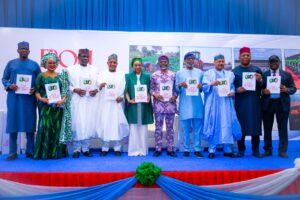
The All Progressives Congress (APC) has unveiled its 2027 Presidential Election Manifesto, outlining its development priorities for 2027 to 2031 and promising to deepen the benefits of President Bola Ahmed Tinubu’s economic reforms.

At the media presentation of the manifesto in Abuja on Tuesday, the Minister of Information and National Orientation, Mohammed Idris, said the administration’s ongoing reforms were already yielding results in security, education, infrastructure and the wider economy.
Idris explained that the policies introduced by the Tinubu government were intended to address longstanding structural challenges and establish a sustainable foundation for economic prosperity.
He maintained that the impact of the reforms was not restricted to APC members or political supporters, insisting that all Nigerians stood to benefit from improved public infrastructure, security and access to education.

The minister specifically referenced the 1.6 million students benefiting from the Nigerian Education Loan Fund (NELFUND), alongside improvements in the security environment and Nigeria’s removal from the FATF grey list.
He also pointed to improved international credit ratings, declining inflation and economic growth as indicators of progress.
While acknowledging the media’s responsibility to scrutinise government policies, Idris appealed to journalists to report positive developments alongside challenges facing the country.
He argued that journalism should promote accountability while helping citizens understand the country’s achievements and areas where further interventions were necessary.
Speaking at the event, the Chief of Staff to the President, Femi Gbajabiamila, said the manifesto represented a commitment between the APC and Nigerians, providing clear targets against which the party’s performance could be measured.
He urged Nigerians to examine the document and hold the party accountable for its promises.
Among the commitments outlined in the manifesto, Gbajabiamila disclosed, were plans to cut the number of out-of-school children by 50 per cent by 2031 and install an additional seven million electricity meters.
He said the APC was seeking the opportunity to continue its policies and create an economy where hard work translates into improved living conditions and greater opportunities.
The Minister of Solid Minerals Development, Dele Alake, described the Tinubu administration’s economic policies as far-reaching structural reforms aimed at repositioning the country for sustainable development.
Alake said the scale and scope of the ongoing reforms distinguished the current administration from previous civilian governments.
On his part, the Minister of Budget and Economic Planning, Atiku Bagudu, said Tinubu’s ambition of transforming Nigeria into a $2 trillion economy informed the difficult economic decisions being implemented by the government.
He, however, stressed the need to ensure that economic growth translates into tangible benefits for ordinary Nigerians, especially low-income households and vulnerable groups.
Presenting the manifesto’s policy framework, the Minister of Industry, Trade and Investment, Dr Jumoke Oduwole, identified four strategic pillars guiding the APC’s agenda.
They include building a secure and resilient nation, improving the quality of life, expanding energy and infrastructure while driving economic growth, and strengthening effective and accountable governance.
Oduwole further outlined the party’s targets for improved food security, affordable living conditions, increased domestic manufacturing, export expansion and employment generation.
She disclosed that the manifesto seeks to create one million export-linked jobs for young Nigerians by 2030, while positioning the country to record more visible gains from economic reforms by 2031.
The presentation was attended by civil society representatives, industry experts, journalists and other dignitaries.
The APC said the manifesto provides a framework for its proposed policies and programmes between 2027 and 2031, while offering Nigerians clear benchmarks for monitoring the party’s promises and performance.
