

INEC Under Fresh Pressure as Chinese Nationals Allegedly Listed Multiple Times in Abuja Voter Register
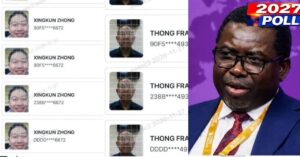
The Independent National Electoral Commission (INEC) is facing renewed scrutiny following allegations that Chinese nationals have appeared multiple times in its voter register, with the commission yet to respond to the latest claims.

Photographs circulating on social media allegedly show an individual identified as Xingkun Zhong appearing seven times under one polling unit in Abuja, while another person identified as Thong Frank reportedly appears four times in the electoral database.
The alleged entries have triggered fresh questions about the integrity of INEC’s voter register and the reliability of the database ahead of the 2027 general elections.
The development adds to an ongoing controversy over suspicious voter records and photographs believed to have been generated using artificial intelligence.
Earlier reports revealed questionable photographs on voter profiles displayed on INEC’s official website, raising concerns about possible irregularities in the commission’s preliminary Register of Voters.
The issue prompted the Socio-Economic Rights and Accountability Project (SERAP) to call for an investigation into the alleged compromise of the electoral database.

In a letter dated October 31, 2026, SERAP urged President Bola Tinubu to direct the Nigeria Data Protection Commission (NDPC) to investigate whether personal information belonging to Nigerians had been unlawfully accessed, altered or compromised.
The letter, signed by SERAP’s Deputy Director, Kolawole Oluwadare, also called for an independent forensic examination of the reported irregularities.
SERAP further urged the authorities to identify those responsible, determine the number of affected records and ensure that eligible voters were not disenfranchised as a result of the alleged anomalies.
The organisation warned that questionable entries and possible unauthorised changes to the database could weaken public trust in the electoral process and undermine the credibility of the 2027 elections.
INEC had previously acknowledged concerns over suspected AI-generated photographs and questionable registration records discovered during the nationwide display of the preliminary Register of Voters from October 9 to 15, 2026.
The commission reportedly stated that the affected records had been flagged for further investigation, while verification and data-cleanup exercises were being carried out ahead of the final register’s certification on December 15, 2026.
The latest allegations involving the reported multiple appearances of Chinese nationals under the same polling unit have further intensified calls for the commission to provide explanations.
However, the photographs circulating online have not been independently authenticated, and repeated appearances in a preliminary register do not necessarily prove multiple registrations or separate valid voter records.
INEC is yet to publicly confirm the latest claims or explain whether the alleged entries resulted from technical errors, duplicate records or other database-related issues.
With preparations for the 2027 general elections gathering momentum, stakeholders are increasingly demanding transparency and accountability from the commission to ensure that the final voter register is accurate, credible and protected from manipulation.
