

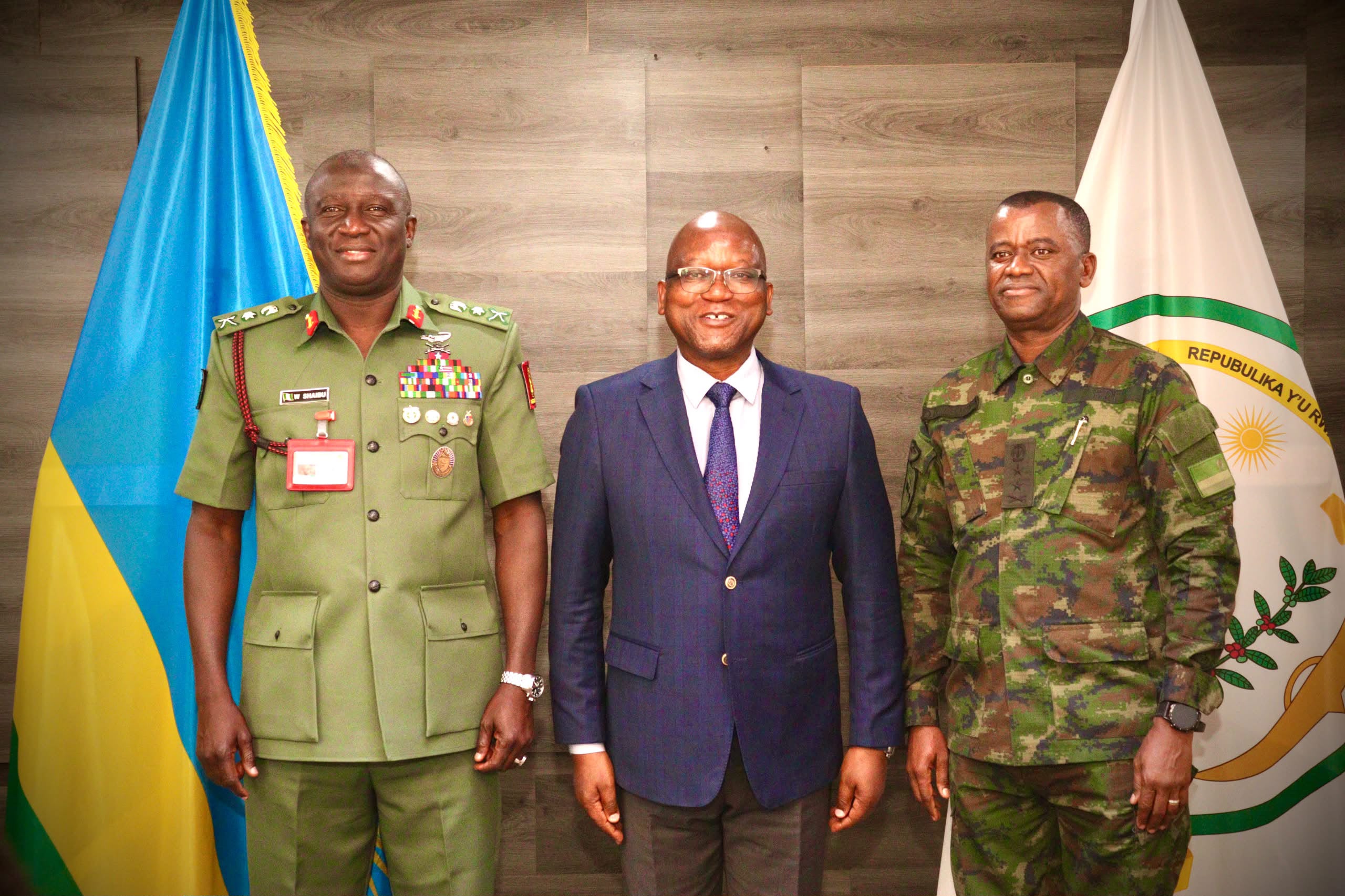
Nigeria, Rwanda Seek Deeper Military Partnership To Tackle IED Threats, Terrorism
The Nigerian Army and the Rwandan Defence Ministry have reaffirmed the need to deepen military cooperation, with particular emphasis on counterterrorism, counterinsurgency, Improvised Explosive Devices (IEDs) response and specialised military training.
The Chief of Army Staff, Lieutenant General Waidi Shaibu, made the call on Wednesday, October 21, 2026, during a meeting with Rwanda’s Minister of Defence, Juvenal Marizamunda, in Kigali, Rwanda.
Shaibu stressed that enhanced bilateral cooperation and the exchange of operational expertise would strengthen the ability of both countries to confront evolving security threats and advance peace and stability across the African continent.
He thanked the Rwandan minister for facilitating his official working visit and reiterated the Nigerian Army’s determination to build on existing defence relations through sustained engagement and professional collaboration.
The Army chief praised the discipline, professionalism and training standards demonstrated by Rwanda’s military institutions, particularly the Rwanda Military Academy at Gako, where he observed aspects of the country’s military training system.
He called for expanded cooperation in detecting and countering IED threats, improving care for victims and strengthening the capacity of both armed forces to respond to asymmetric warfare.
According to him, combining Nigeria’s and Rwanda’s experiences in counterterrorism and counterinsurgency would enhance operational effectiveness, improve preparedness and contribute to the protection of civilian populations.
Responding, Marizamunda commended the Nigerian Army for its continued contributions to the development of military relations between the two countries.
He highlighted existing professional exchanges, which range from officer-cadet training to strategic military education, as important platforms for strengthening institutional capacity and promoting mutual understanding between the armed forces.
The minister also acknowledged Nigeria’s deployment of two directing staff to support the development of the National Defence College–Rwanda, while calling for increased collaboration in counterinsurgency and peace support operations.
Marizamunda noted that the exchange of military knowledge and operational experiences would benefit both countries and contribute to broader international security efforts.
He added that sustained partnerships, specialised training programmes and closer professional engagement remained critical to developing resilient armed forces capable of responding to contemporary security challenges.
The discussions reflect the growing importance of African-led defence cooperation in addressing transnational security threats, strengthening military institutions and promoting lasting peace across the continent
