

Lead Poisoning: FG Unveils Five-Year Plan, Targets Stronger Prevention and Enforcement
The Federal Government has unveiled a five-year strategic plan to eliminate lead poisoning in Nigeria, with a focus on preventing exposure, strengthening regulatory enforcement and improving the country’s capacity to detect and manage cases.
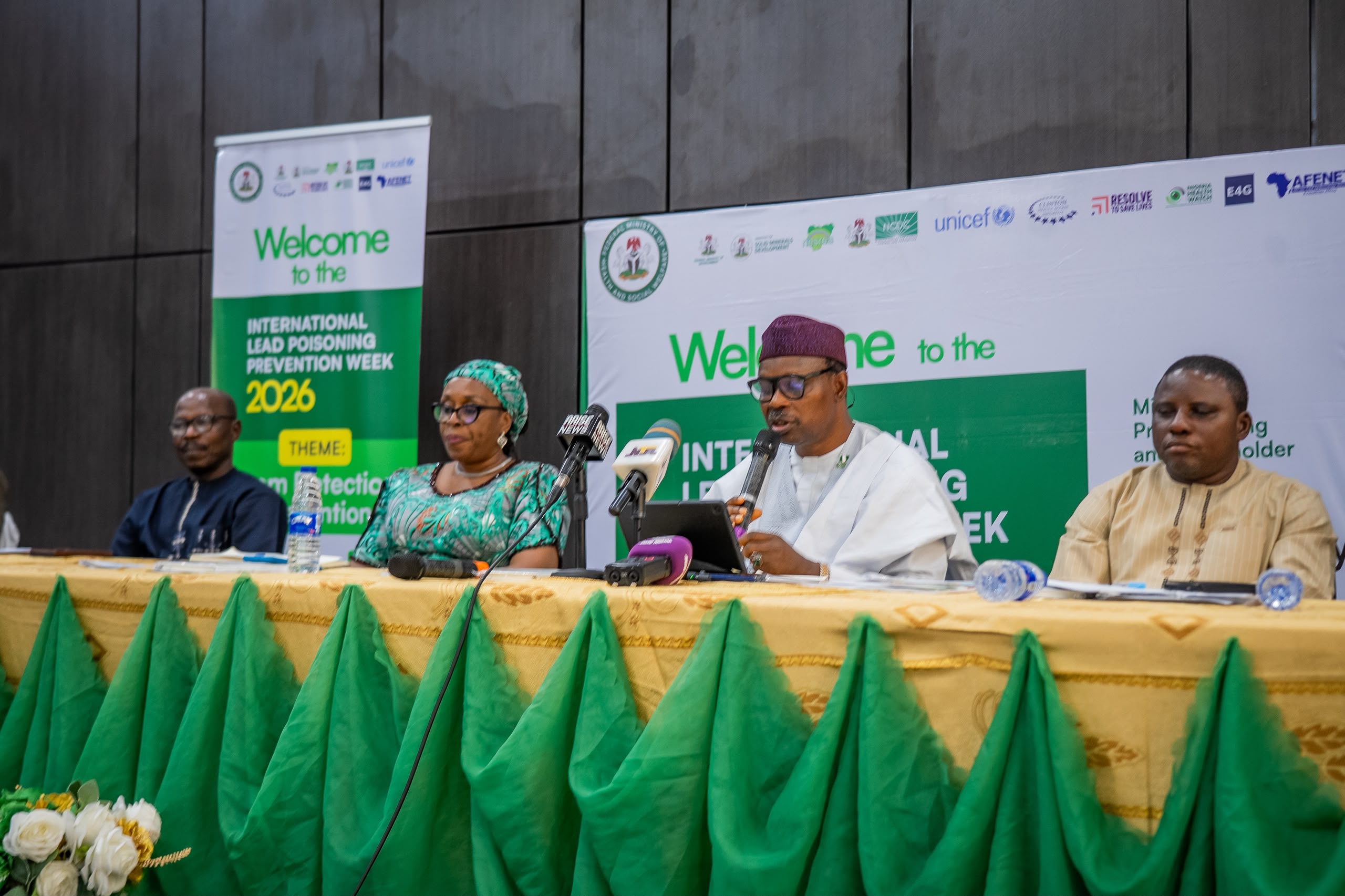
The plan was announced by the Minister of State for Health and Social Welfare, Dr. Iziaq Adekunle Salako, during the 2026 International Lead Poisoning Prevention Week commemoration in Abuja on Wednesday.
Held under the theme “From Detection to Prevention,” the event highlighted the need for stronger national action to address the health and environmental dangers associated with lead exposure.
Speaking at the event, Salako described lead poisoning as a serious public health challenge, particularly for children, pregnant women and women of childbearing age, who face significant risks from exposure.

He said the newly launched Five-Year Strategic Plan would provide a coordinated national framework for tackling lead poisoning through prevention, surveillance, regulation and collaboration across different sectors.
According to the Minister, Nigeria must move beyond detecting lead poisoning cases and focus on eliminating or controlling the sources of exposure.
He identified the operationalisation of the Inter-Agency Working Group on Lead Poisoning Prevention and Elimination as an important development in strengthening cooperation among government agencies, development partners and other stakeholders.
Salako also pointed to experiences in Lagos, Ogun, Sokoto and Zamfara States as evidence of the need for targeted interventions that reflect the specific sources and pathways of lead exposure in different communities.
He disclosed that state-specific prevention and control action plans were being prioritised for the four states to complement the national strategy.
The Minister said the finalisation of the Lagos State action plan was particularly important, given the blood lead level and children’s environmental health assessment already conducted in the state.

Under the strategic plan, the Federal Government intends to strengthen environmental and occupational surveillance, improve laboratory and institutional capacity, enhance regulatory oversight and enforcement, and establish clearer referral pathways for people found to have elevated blood lead levels.
A costed three-year national roadmap is also being developed to guide implementation through measurable targets and time-bound interventions.
Salako urged state governments, industries, development partners, civil society organisations, professional associations and community leaders to support the implementation of the plan.
He stressed that eliminating lead poisoning would require a collective effort extending beyond government institutions to households, workplaces and communities.
“Communities are central to prevention, and our efforts must extend beyond government institutions to all of society,” the Minister said, while urging traditional and religious leaders, researchers, community-based organisations and the media to play active roles in raising awareness and promoting preventive measures.
He also advised Nigerians to reduce their risk of exposure by avoiding contaminated soil and dust, using lead-safe products and following appropriate safety precautions during battery recycling, painting and other activities that could expose them to lead.
Other recommended measures include keeping work clothes and footwear away from residential areas, wet-cleaning floors and children’s play spaces, and consuming foods rich in calcium, iron and vitamin C.
Reaffirming the Ministry’s commitment to the initiative, Salako said sustained cooperation among relevant stakeholders would be essential to translating scientific evidence into effective policies and practical interventions.
He maintained that a preventive and sustainable approach was necessary to protect vulnerable populations, safeguard communities and minimise the long-term health consequences of lead exposure.
The Federal Government’s initiative is expected to strengthen coordination across relevant sectors and provide a framework for sustained national and state-level action against lead poisoning.
