

Rescued Chibok Schoolgirl Expresses Desire to Return to Boko Haram Husband After Reuniting With Family
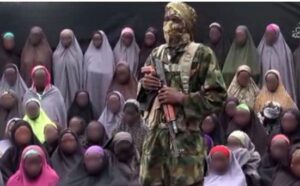
Former Director-General of the National Intelligence Agency (NIA), Ambassador Ahmed Rufai, has narrated a shocking experience involving a rescued Chibok schoolgirl who reportedly wanted to return to Boko Haram after being reunited with her parents.
Rufai revealed that the woman, who spent years in the hands of Boko Haram insurgents, had developed a relationship with members of the terrorist group to the extent that she preferred returning to them rather than staying with her family.

He made the revelation at an international security forum in Qatar while discussing the difficulties involved in rescuing victims of terrorism and reintegrating them into society.
Recounting the incident, Rufai said the woman had been married to three Boko Haram fighters. Her first two husbands were reportedly killed during combat, while a senior commander within the terrorist organisation arranged new husbands for her.
He described the commander as a father figure who took responsibility for her welfare within the group.
“She had a godfather who was a zonal commander of the terrorist group, who adopted her as a daughter. Each time she lost her husband in the fight, he would be the one to get her a new husband,” the former NIA boss said.
According to Rufai, following her rescue, the woman was brought to Abuja, where security officials subjected her to medical examinations and debriefing.

Although she was happy to reunite with her parents and see her family again, she reportedly expressed a desire to return to the terrorist group.
“She loved them. She wanted to see them, and so on. And then the third interesting thing is that we subjected her to medical checks and found her to be very healthy. But the interesting thing is that she wanted to go back,” he recounted.
The former intelligence chief said the incident highlighted the difficulties security agencies encounter when dealing with people who have spent years in captivity and developed emotional attachments to their captors.
The Chibok abduction occurred on April 14, 2014, when Boko Haram insurgents stormed Government Girls Secondary School in Chibok, Borno State, and abducted 276 schoolgirls.
The incident sparked global outrage and the #BringBackOurGirls campaign, while some of the girls who remained in captivity were reportedly forced into marriages with insurgents.
Speaking further, Rufai explained that kidnapping operations by terrorist groups are driven by different motivations, including ideology, political demands and financial interests.
He said some groups abduct people to publicise their causes, while others are primarily interested in collecting ransom.
“In most cases, it was political, to make their case known,” he stated.
He explained that when kidnappers are financially motivated, security agencies may have to employ hostage diplomacy through confidential negotiations and trusted intermediaries.
Rufai also warned against treating ideological terrorist organisations and ordinary criminal kidnapping gangs as the same, explaining that their motivations and operational methods differ.
According to him, criminal gangs are largely driven by the desire to make money and enjoy material benefits rather than ideological beliefs.
He added that some of these criminal networks also engage in arms trafficking, vehicle theft and attacks on security operatives.
