

Nigeria, Four Other West African Nations Push To Complete Regional 330kV Power Project
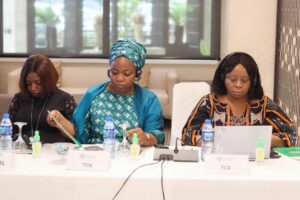
The West African Power Pool (WAPP) North Core 330kV Interconnection Project, involving Nigeria, Niger, Benin, Burkina Faso and Togo, has achieved more than 75 per cent completion, as regional governments and international development partners work to overcome outstanding challenges and fast-track its delivery.

The project, which is expected to transform electricity transmission and cross-border power trading in West Africa, was the focus of the 8th Joint Supervision Mission of its financing partners held in Abuja between October 26 and November 6, 2026.
At the meeting, stakeholders reviewed the project’s implementation status and discussed measures to address delays, security concerns, contractor performance and other challenges affecting the remaining construction activities.
Representing the WAPP Executive Board Chairman and TCN Managing Director, Engr. Sule Ahmed Abdulaziz, the General Manager of Programme Coordination at TCN, Engr. Aminu Tahir, urged all participating countries and partners to sustain their commitment to the project.
He maintained that stronger collaboration, timely decision-making and coordinated action were necessary to ensure the successful completion of the regional electricity infrastructure.

Similarly, WAPP Secretary General, Mr Abdoulaye Dia, represented by Mr Kodjo Afidegnon, said the project remained critical to achieving a more integrated and reliable West African electricity market.
He recalled that the initiative was launched in 2019 to strengthen regional electricity security, encourage cross-border power exchanges and improve access to electricity across participating countries.
Dia, however, acknowledged that implementation had been affected by several challenges, including insecurity along parts of the project corridor, flooding, the COVID-19 pandemic, supply chain difficulties, political instability and border closures.
These setbacks, he explained, had resulted in delays, additional costs and temporary suspension of construction activities in some areas to protect workers.
Despite the difficulties, considerable progress has been recorded in the five countries.
Benin has provisionally accepted its Malanville substation, while work continues on the Niger River crossing.
Burkina Faso has commissioned the Ouaga Est and Ouaga Sud-Est substations, as well as 33 kilometres of associated 225kV transmission lines.
In Niger, installed equipment at Niamey II and Gazaoua has been operational since July, helping stabilise the two existing 132kV electricity interconnection lines supplied from Nigeria.
Nigeria is also making progress on the construction of its 330kV transmission line, with efforts ongoing to prepare the facility for connection to the national grid.
Beyond infrastructure development, the project has provided compensation to 5,726 affected persons, resolved almost all recorded complaints, provided electricity to 170 communities in Burkina Faso and Niger, and generated 2,483 jobs across the project corridor.
The African Development Bank urged stakeholders to adopt practical and result-oriented measures to accelerate the remaining works without compromising environmental protection, workers’ safety and social safeguards.
Its representative further warned that failure to complete critical infrastructure in any of the participating countries, particularly Niger, could prevent the project from delivering its full regional benefits.
The bank assured participating countries, WAPP and national electricity utilities of its continued support towards overcoming the remaining obstacles and achieving successful project completion.
Upon completion, the project is expected to boost electricity supply security, strengthen regional cooperation and create greater opportunities for cross-border electricity trading among West African countries.
Representatives of the African Development Bank, World Bank, participating countries’ Ministries of Energy and Finance, national electricity utilities and the WAPP North Core Project Management Unit attended the Abuja meeting.
