

BREAKING: Tinubu Tells U.S. Court Nigerians’ Interest In His Past Does Not Justify Release Of FBI, DEA Records
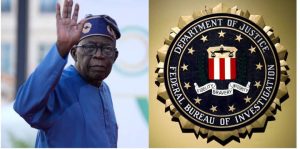
President Bola Ahmed Tinubu has told a U.S. federal court that public interest in his past does not, on its own, justify the release of FBI and DEA records concerning him.
Tinubu’s lawyers made the argument in an amended response filed before the U.S. District Court for the District of Columbia in a Freedom of Information Act (FOIA) lawsuit brought by transparency activist Aaron Greenspan.
Greenspan is seeking records from U.S. government agencies concerning Tinubu and other individuals. He has asked the court to order the FBI, DEA and the Executive Office for U.S. Attorneys to release records without redactions.
Tinubu’s lawyers urged the court to reject Greenspan’s motion for summary judgment and allow the agencies to maintain existing redactions and withholdings.
At the centre of the dispute is the meaning of “public interest” under FOIA.
Greenspan has argued that the records are of public importance because Tinubu is Nigeria’s president and information about his background is relevant to Nigerians.
Tinubu’s lawyers disputed that argument, saying an individual’s prominence or public importance does not automatically constitute the type of public interest recognised under FOIA.
“Plaintiff’s interest in an individual or that individual’s activities is not a ‘public interest’ that FOIA recognizes,” the lawyers argued.
They cited U.S. Supreme Court decisions stating that FOIA is primarily intended to provide information about government activities, rather than expose private information about individuals contained in government files.
According to the lawyers, Greenspan’s requests are primarily focused on Tinubu rather than on how the FBI or DEA carried out their official responsibilities.
They pointed to Greenspan’s request for what he described as the “entire FBI file” concerning Tinubu.
Tinubu’s lawyers also said the FBI and DEA had already released thousands of documents in response to the requests, although some information remained redacted or withheld.
They argued that removing the remaining redactions would not necessarily reveal additional information about the agencies’ conduct.
The lawyers further challenged Greenspan’s stated interest in Tinubu’s background and fitness for office, arguing that it differs from the government-transparency purpose protected by FOIA.
They characterized Greenspan’s requests as an attempt to uncover alleged criminal records involving Tinubu and potentially use the information in Nigerian politics. That is the lawyers’ characterization of Greenspan’s purpose, not a finding by the court.
The lawyers also addressed information that had previously become public, including records connected to a 1993 U.S. civil forfeiture proceeding involving approximately $460,000 linked to Tinubu.
They argued that the previous disclosure of some information does not eliminate Tinubu’s privacy interest in details that have never been publicly released.
“An individual retains a privacy interest in the details that remain undisclosed,” they argued.
Tinubu’s lawyers also maintained that his position as Nigeria’s president does not remove his privacy rights over records relating to events that allegedly occurred decades before he became president.
The amended filing states that the records at issue concern events dating approximately from 1988 to 1991.
Greenspan has asked the Washington, D.C. federal court to compel the FBI, DEA and Executive Office for U.S. Attorneys to release additional records without redactions.
The case includes records relating to a 1990s narcotics investigation that Greenspan says identified Tinubu as a subject, as well as documents connected to the 1993 civil forfeiture proceeding.
Tinubu has denied wrongdoing.
The court has yet to issue a final ruling on Greenspan’s request for the release of the disputed records.
