

Nigeria Customs Advances Digital Modernisation, Highlights B’Odogwu And Artificial Intelligence In Brussels
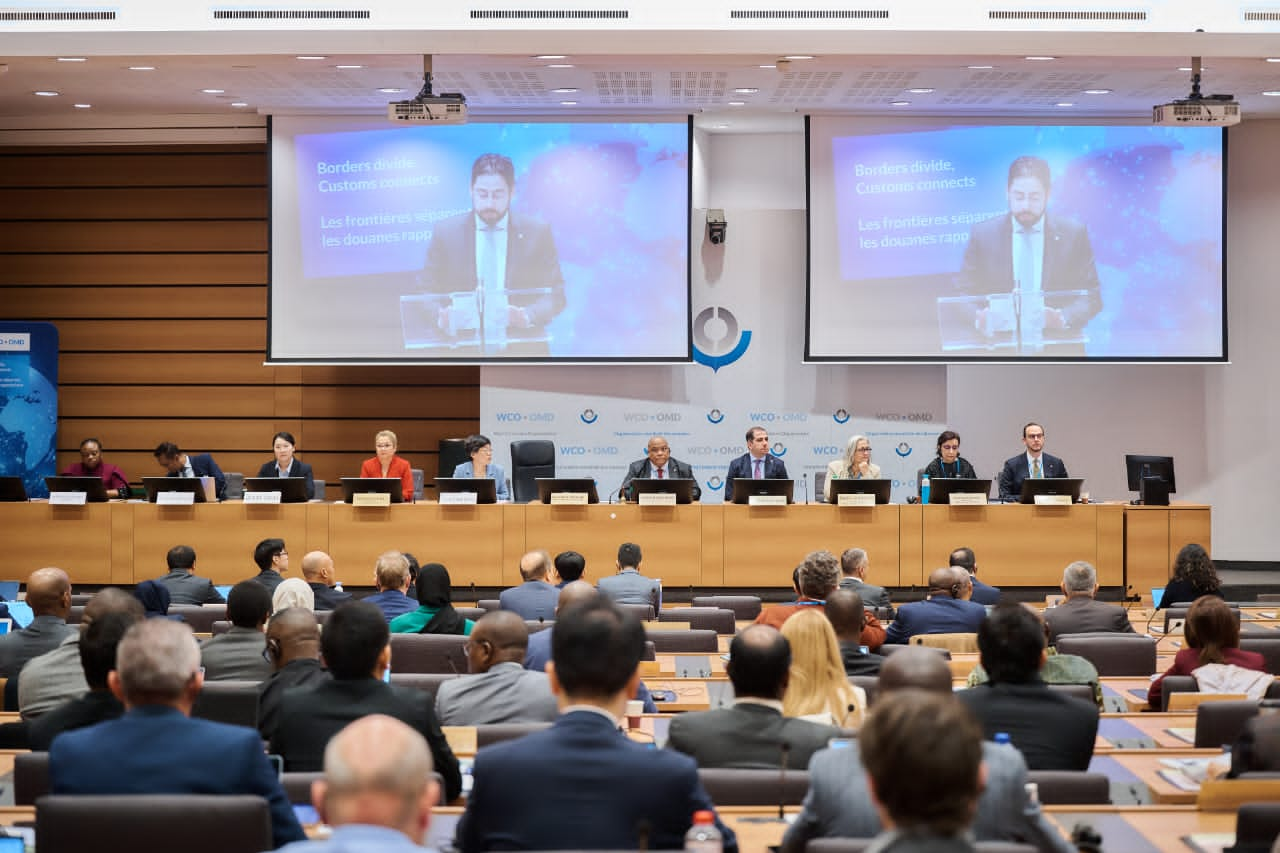
The Nigeria Customs Service has reaffirmed its commitment to modernising Customs administration through digital technology, artificial intelligence and data-driven operations at the 2026 World Customs Organisation Smart Customs Project Global Event in Brussels, Belgium.
The event, which took place at the WCO Headquarters from October 29 to 30, provided an international platform for Customs administrations and technology experts to examine innovative solutions for improving border management, operational efficiency and international trade facilitation.
Representing Nigeria, Assistant Comptroller Omolara Adedeji presented the Service’s digital transformation experience, highlighting the progress made under its Modernisation Project.
Speaking on the theme, “Nigeria Customs Service: The Journey Towards Smart Customs,” Adedeji outlined the Service’s gradual shift from conventional manual processes to an integrated, technology-driven Customs system.
She identified B’Odogwu, the Unified Customs Management System (UCMS), as one of the major achievements of the modernisation initiative, explaining that the platform is strengthening automation, electronic processing and data-driven decision-making.
She noted that the system was also enhancing collaboration between the Nigeria Customs Service, government agencies and private-sector stakeholders.
Adedeji explained that Nigeria’s Smart Customs vision rests on two critical components: smart technology and smart data.
While smart technology covers automation, integrated digital platforms, modern ICT infrastructure and interconnected systems, smart data focuses on intelligence gathering, risk management, analytics and effective information sharing.

She emphasised that technology alone would not guarantee successful modernisation without adequate investment in human resources.
According to her, the Service is prioritising personnel development through capacity building and specialised training to ensure officers acquire the technical skills needed to manage emerging technologies and sustain innovation.
The presentation also showcased the deployment of geospatial technology in various Customs operations, particularly fleet and asset management, as well as the Electronic Cargo Tracking System.
These applications, she explained, are improving cargo visibility, operational monitoring and the management of critical resources.
Looking ahead, Adedeji said the NCS was positioning itself for a new phase of intelligent Customs operations through the adoption of Artificial Intelligence, Machine Learning, predictive analytics, non-intrusive inspection technologies, integrated border management and real-time operational intelligence.
She maintained that these technologies would strengthen the Service’s ability to identify emerging risks, improve operational responses and create a more efficient environment for legitimate trade.
A major highlight of the global event was the presentation of the updated WCO Study Report on Disruptive Technologies, which examined emerging technological developments and their implications for Customs administrations worldwide.
The opening ceremony featured remarks by WCO Deputy Secretary General Ricardo Treviño Chapa, alongside keynote addresses by Xueyan Guo, Director General of the International Cooperation Department of China’s General Administration of Customs, and Eduard Hakobyan, Chairman of Armenia’s State Revenue Committee.
The programme also featured discussions on Artificial Intelligence, Machine Learning and Blockchain, including technical reports, readiness assessment tools and practical case studies.
Participants from Cambodia, Mexico, Türkiye and Vietnam further examined AI governance, institutional readiness and responsible technology deployment in Customs administrations.
Through its participation, the Nigeria Customs Service demonstrated its commitment to aligning its modernisation efforts with emerging global standards and building a smarter, more efficient and technology-driven Customs administration.
